
Signals
Data-driven insights and charts on trends shaping digital assets.

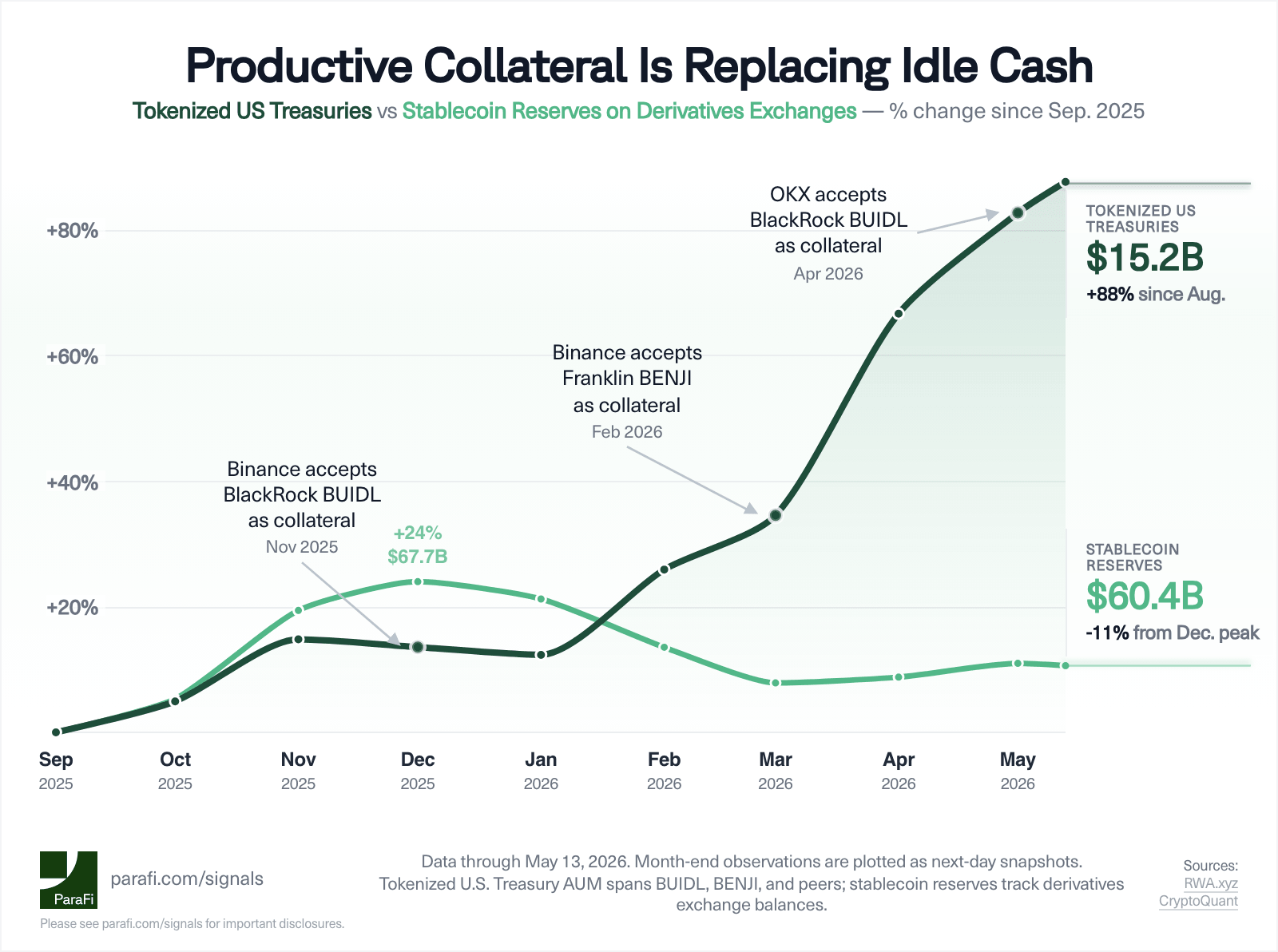
Tokenized real-world assets (RWA) on public blockchains (excluding stablecoins) crossed $34B in May 2026, up from $11B in May 2025. A 3x move in 12 months.
U.S. Treasuries lead at $15.2B, nearly half the tokenized RWA market, and almost double their September 2025 level.
The drivers are multiple: exchange collateral integrations, compressed DeFi yields, and a growing institutional preference for yield-bearing alternatives to idle stablecoin balances.
Exchanges including Binance and OKX now accept BlackRock's BUIDL, Franklin Templeton's BENJI and others as off-exchange collateral. Tokenized Treasuries can earn yield and serve as margin on the same venues where capital used to sit idle.
Stablecoin reserves on derivatives exchanges peaked at $67.7B in late November 2025 and have since contracted by ~$7B. Tokenized Treasuries broke out of a $9B plateau and added $6B over the same window.
Tokenized Treasuries are increasingly the productive collateral option that idle dollars can be measured against.

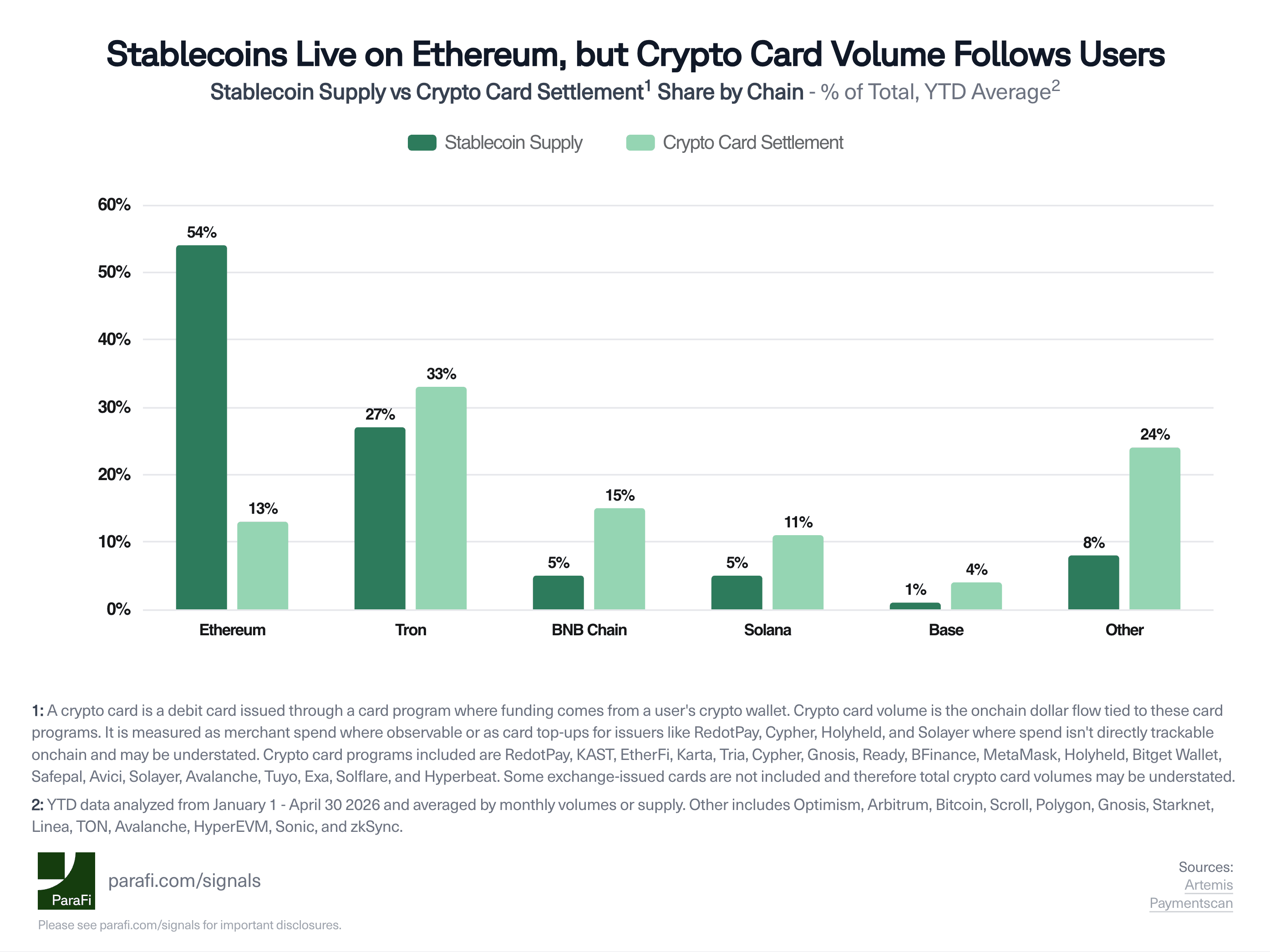
Crypto card volumes have grown 12x over the past two years, now exceeding $650M in monthly volume.
At the same time, where stablecoins live and where they’re spent are diverging. Ethereum holds 54% of stablecoin supply but accounts for just 13% of crypto card settlement, while Tron holds 27% of supply but processes 33% of card volume.
The gap is less about fees and more about distribution. Much of crypto card activity flows through providers like RedotPay, whose user base is concentrated in Asia and MENA, where users already hold USDT on Tron.

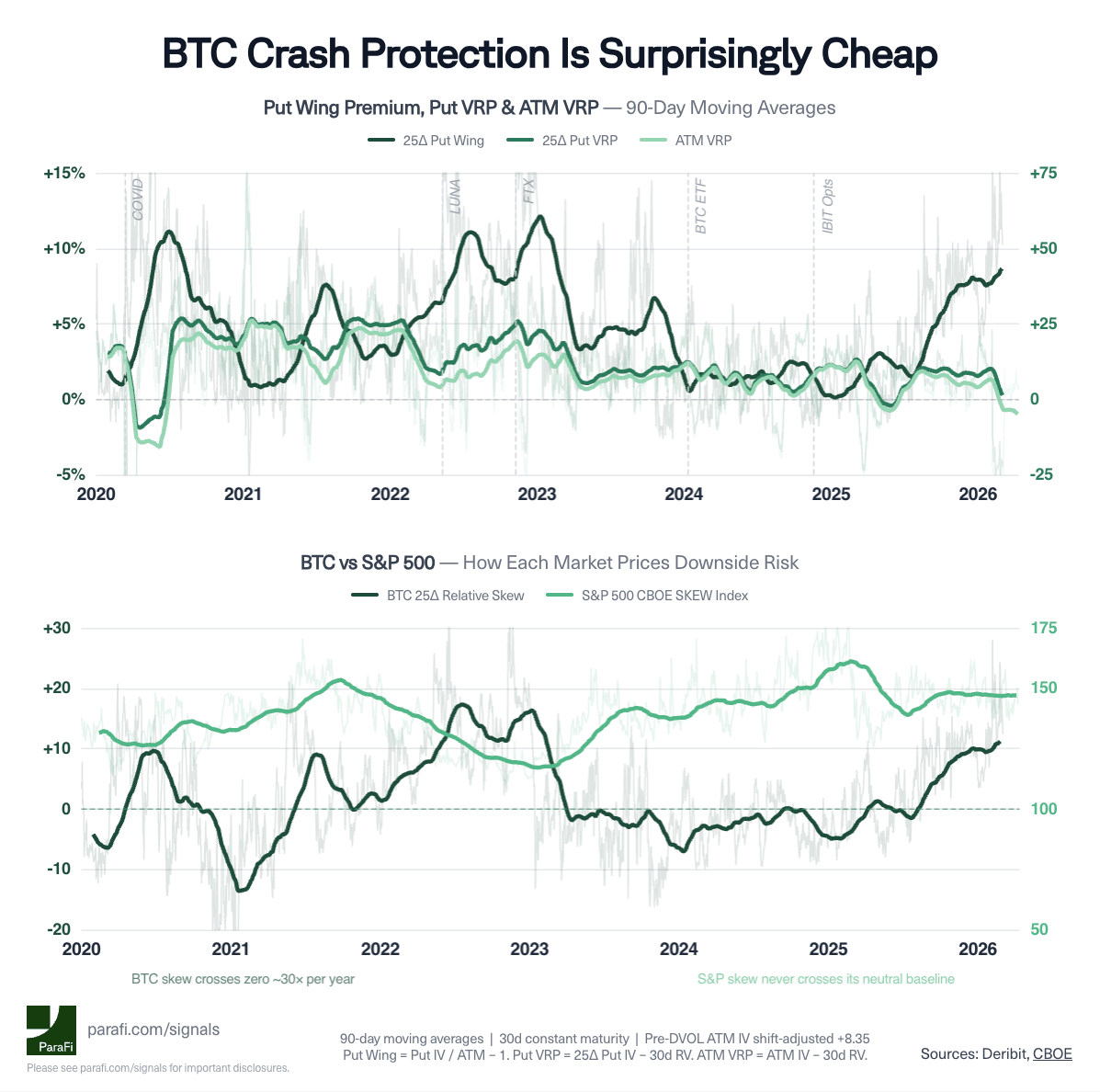
Why does BTC’s crash protection appear cheap?
Despite multiple 50-80% drawdowns since 2020, BTC’s 25-delta put wing, a standard measure of crash insurance cost, has averaged just ~5% above at the money (ATM) implied volatility (IV). On ~11% of all days, the premium disappears entirely. In 2024, that figure reached 29%.
One possible driver is persistent vol selling. Out of the money (OTM) puts carry the richest IV on the surface, and Chart 1 shows the 25Δ put’s vol risk premium consistently exceeds the ATM vol risk premium. That extra carry attracts systematic sellers, increasingly tied to ETF-related flows, whose supply compresses the put wing even as tail risk remains.
For context, Chart 2 shows S&P 500 crash protection virtually never gets this cheap, while BTC’s skew crosses zero ~30 times per year.
From such low starting levels, it can be theorized that a major drawdown could trigger a meaningful repricing.

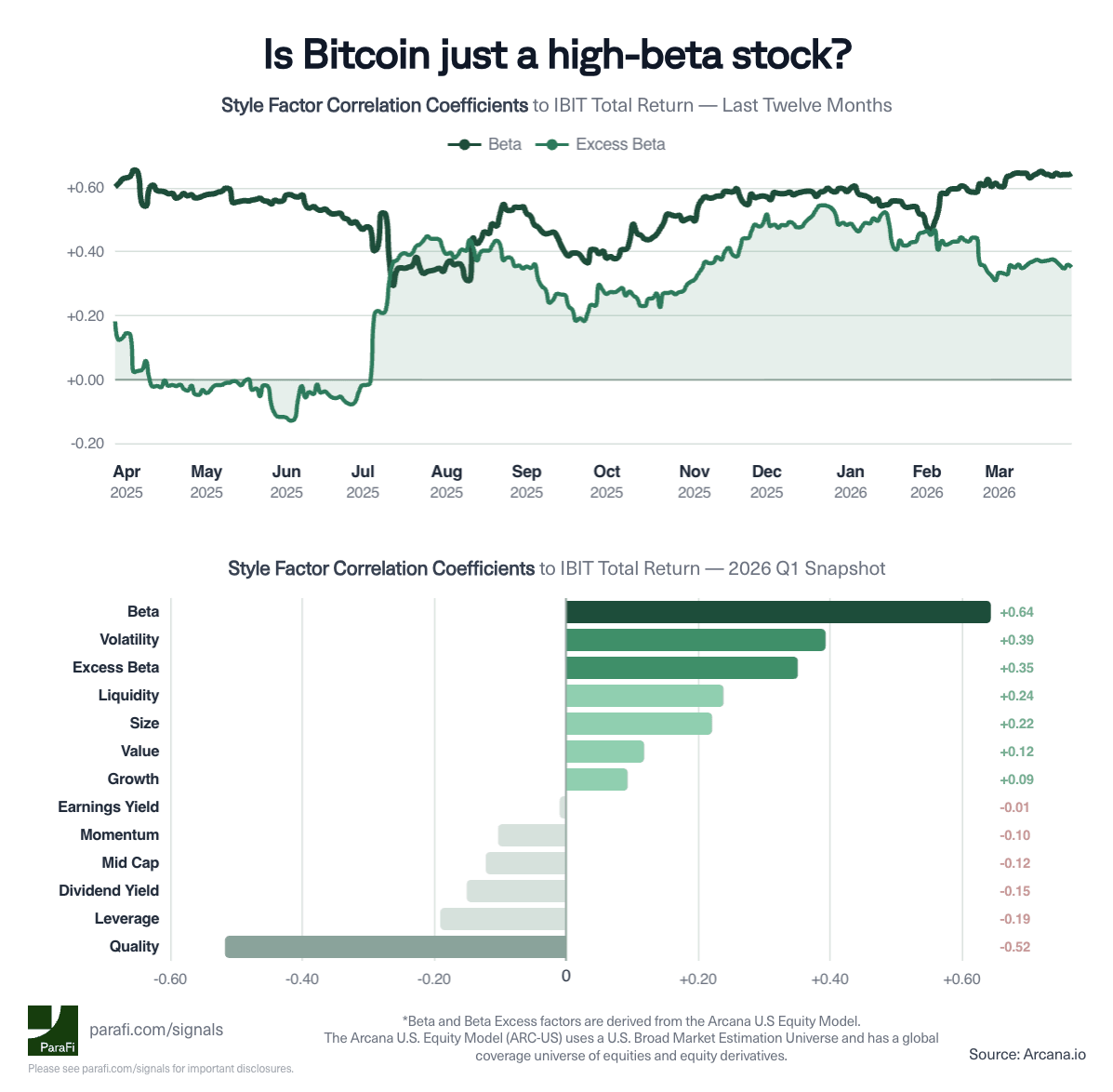
Is Bitcoin just a high-beta stock?
Generally, crypto's idiosyncratic returns are poorly explained by factor models. However, understanding investment factors can help construct risk-adjusted portfolios.
For example, Bitcoin's daily returns over the last year, proxied by the $IBIT spot Bitcoin ETF, show a sticky median correlation of +0.55 with the Beta style factor, suggesting that Bitcoin behaves like a high-beta stock more than any other factor.
More telling, however, is the Excess Beta factor. In July 2025, the Excess Beta style factor coincided with Bitcoin's jump from $99K to $120K, uniquely capturing a leverage-fueled short squeeze amid 2025 DAT euphoria that the Beta factor alone did not explain.
The takeaway? These observations suggest that Beta and Excess Beta may be useful historical factor lenses for distinguishing between periods when Bitcoin behaves more like a broad-market beta-correlated asset and periods when Bitcoin is more influenced by short covering, leverage, and momentum chasing.
Note: This content is provided for informational purposes only and reflects ParaFi's views as of the date posted, which may change without notice. This material is not investment advice, a recommendation, or an offer of advisory services or securities. The analysis is based on historical data and methodological assumptions, including the use of IBIT as a proxy for bitcoin exposure. Relationships stated are based on historical data, may not persist, do not imply causation, and should not be treated as standalone predictive signals or a guarantee of investment results. Correlation does not imply causation, and observed relationships may not persist.

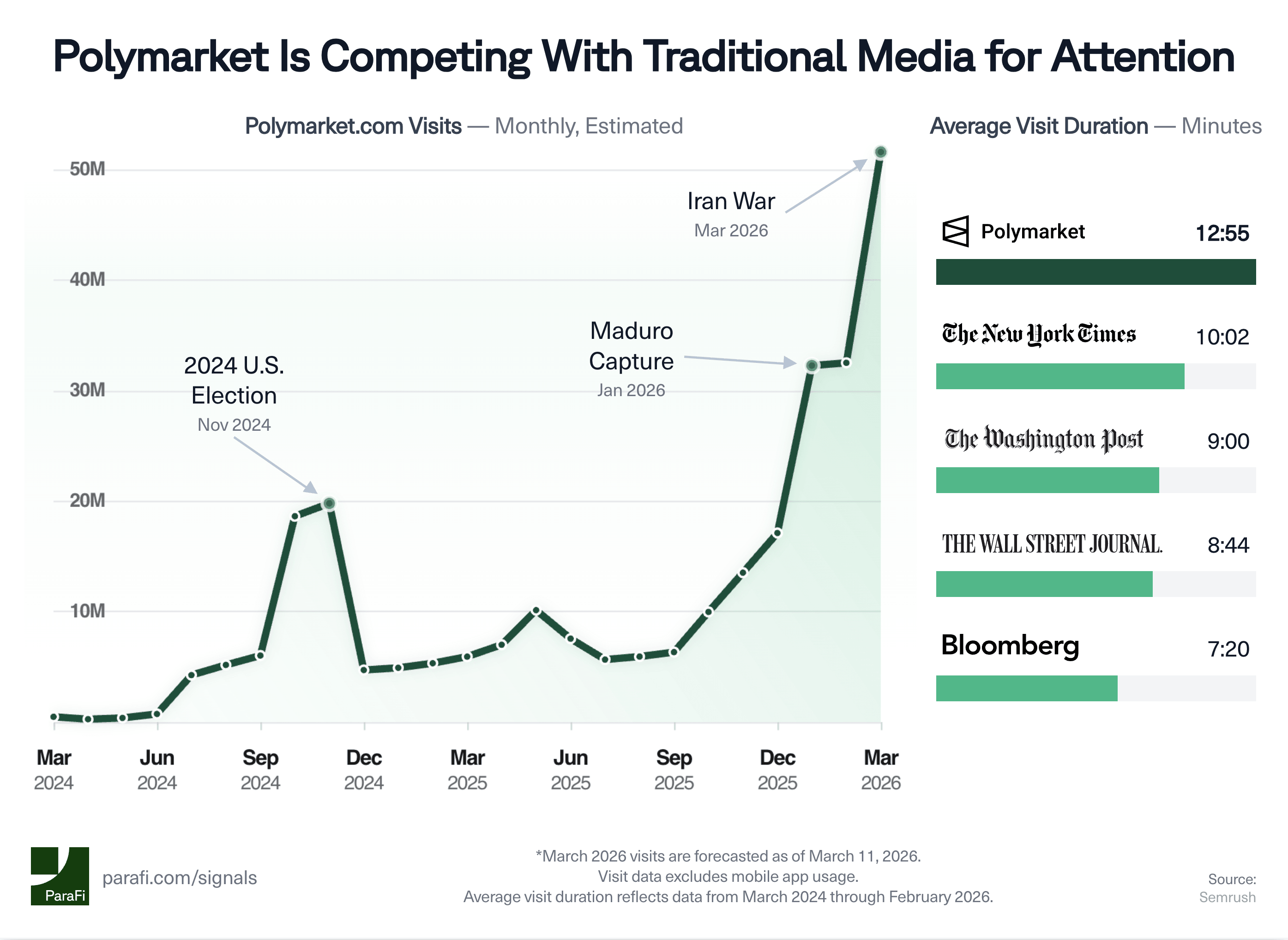
Polymarket is increasingly competing with traditional media as a destination for real-time information.
Monthly website visits suggest a much broader audience using prediction markets to gauge major political and geopolitical developments. Visits are on track to exceed 50 million in March 2026, roughly 2.5x the levels seen during the 2024 U.S. presidential election. Users spend nearly 13 minutes per visit on average, longer than sessions on several major media sites including New York Times, Washington Post, Wall Street Journal, and Bloomberg.

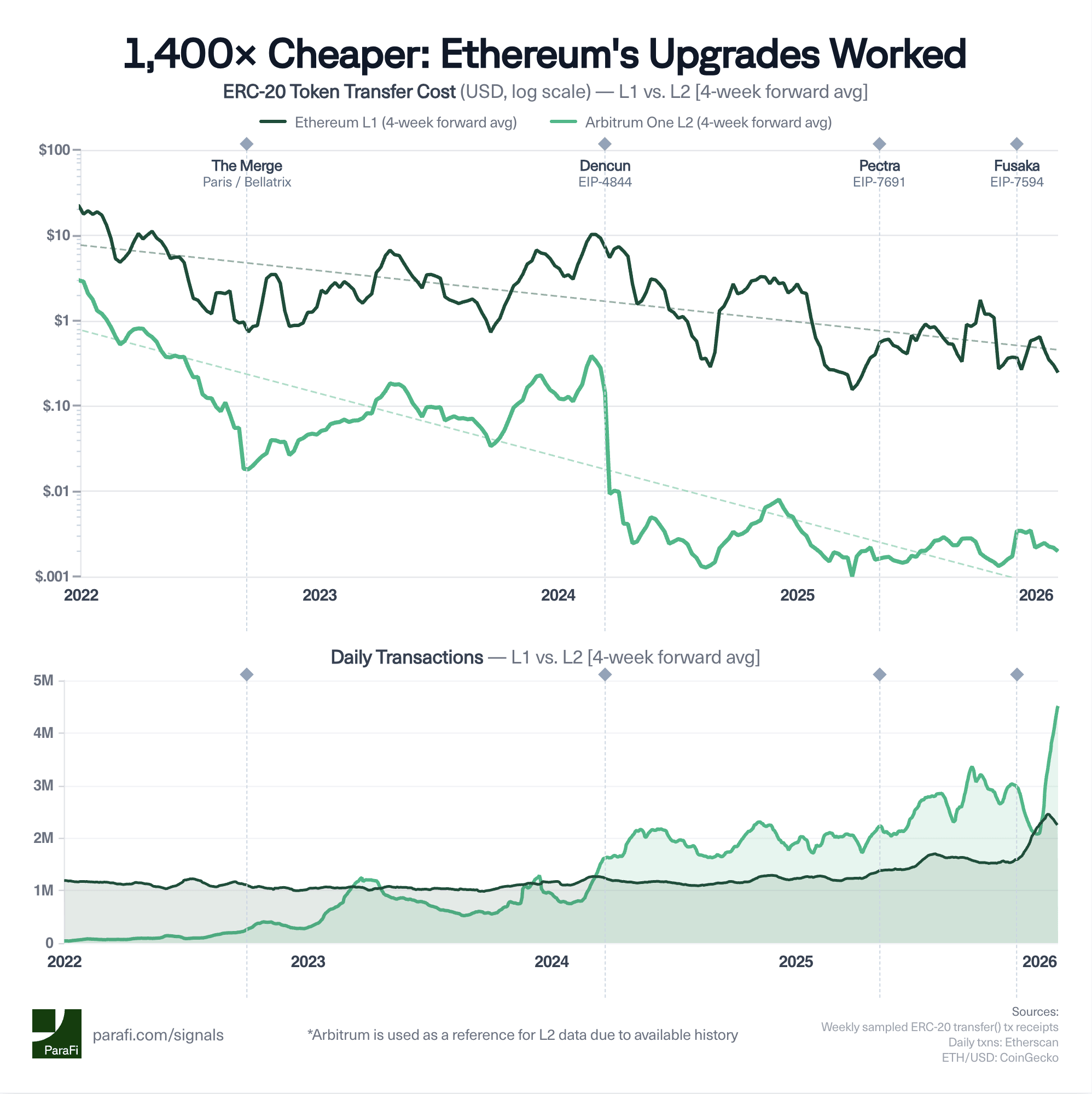
Amid ongoing debate about Ethereum's roadmap and the role of L2s, the rollup-centric model has materially reduced execution costs while expanding throughput.
L2 fees have collapsed. As of January 2026, a standard transfer on Arbitrum costs ~$0.002 — down over 1,400x from 2022. Dencun (Mar '24) was the structural inflection, compressing L2 fees ~94% in subsequent months.
L1 fees have also declined. A USDC transfer on Ethereum mainnet now runs ~$0.25, with Fusaka (Dec '25) increasing gas limits and reaccelerating L1 activity (+47% in daily transactions post-upgrade).
Sub-cent fees on L2s unlock use cases that were previously uneconomical: micropayments via x402 protocol, day-to-day stablecoin payments, and AI agents transacting on behalf of users at machine speed.

Latin America is one of the fastest growing regions for mainstream crypto adoption.
Stablecoins lie at the center, establishing a low cost and accessible financial layer for USD savings, remittances, and payments.
Regional crypto inflows are approximated at $800B-$1.2T in 2025 (+38-107% YoY).
Mobile-first fintech leaders such as Lemon (5M+ accounts), Felix (40k+ payout locations), and MB | Mercado Bitcoin (4M+ accounts) are driving mainstream usage across key markets.
In Argentina alone, 12.5% of the population is now interacting with crypto.


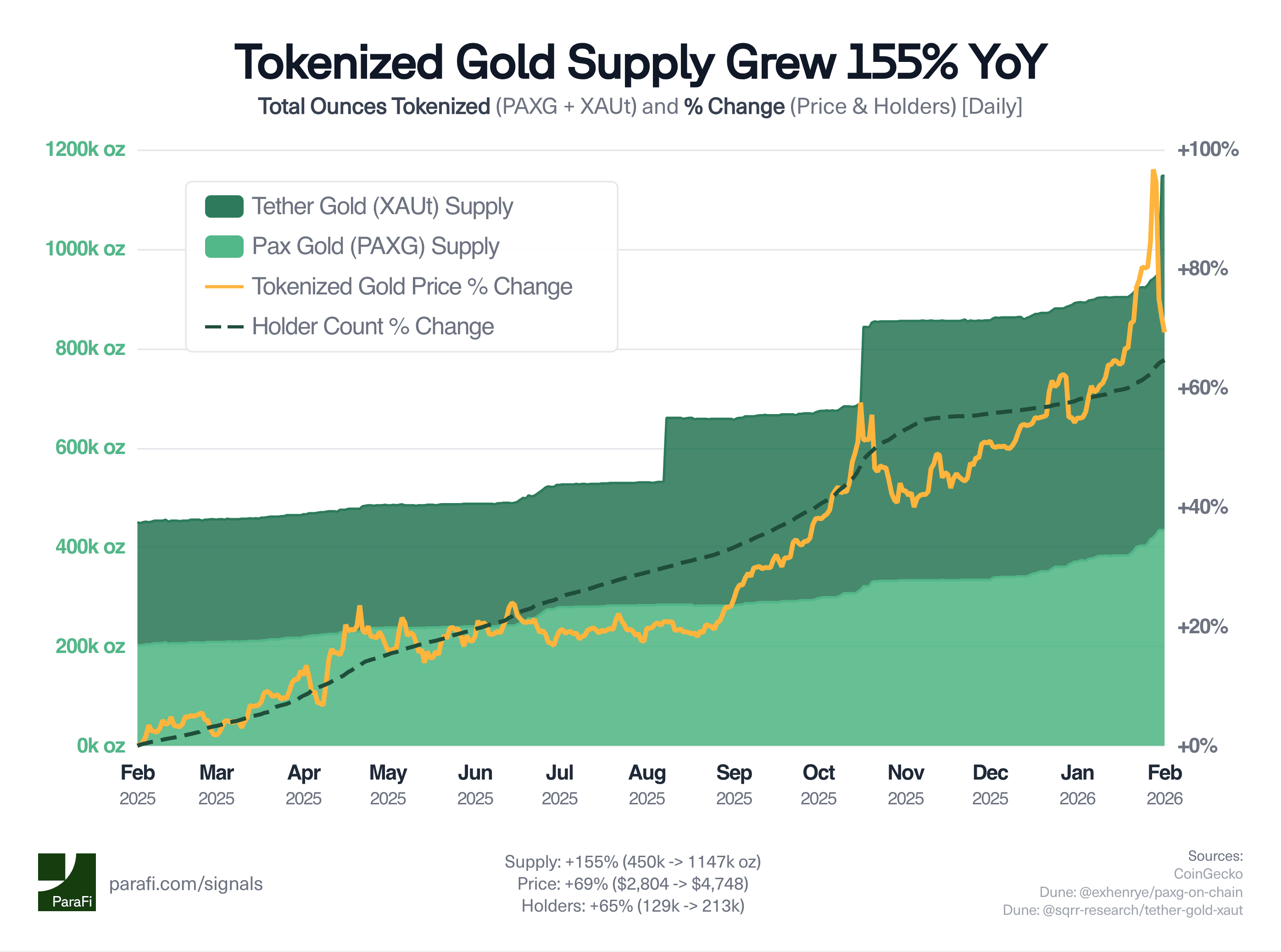
Tokenized gold had a record year in adoption: supply grew +155% YoY and holders grew +65% YoY.
Nearly 700k oz of gold were newly tokenized across PAXG and XAUt, lifting total on-chain supply to 1.15M oz — about ~0.016% of above-ground gold — and market cap to $5.4B (+332% YoY), demonstrating demand for blockchain-native gold exposure beyond speculative price action and signaling a broader trend of hard-assets moving on-chain.

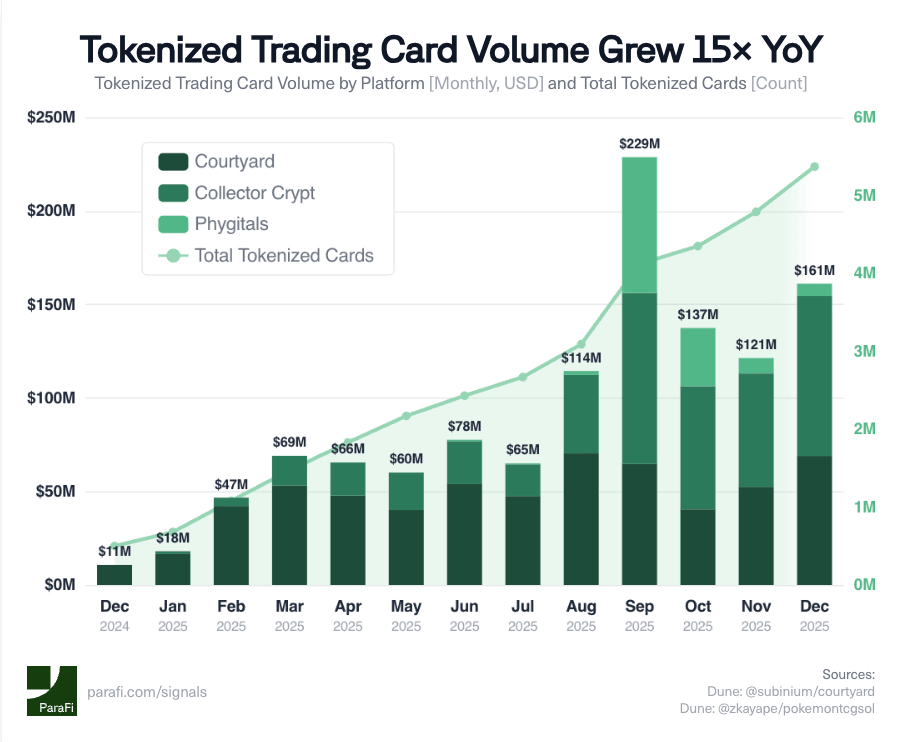
Monthly trading card volume increased ~15x YoY in 2025 as tokenized Pokémon and sports cards gained mainstream traction across platforms like Courtyard, Collector Crypt, and Phygitals.
Today, over 5M cards are tokenized and traded on chain.
Important Disclosure: ParaFi Signals are provided solely for informational purposes and are not intended to be, nor should it be construed as, financial, legal, tax or investment advice. The information provided above should not be considered a recommendation to purchase or sell any particular security.
Content is as of the date posted and subject to change without notice. Certain information has been obtained from third-party sources, including from portfolio investments of investment vehicles managed by ParaFi. ParaFi makes no representations or warranties, express or implied, as to the accuracy or completeness of the statements or any information made herein or through a ParaFi social media account and any liability therefore is expressly disclaimed. ParaFi makes no representations about the enduring accuracy of information, or its appropriateness for a given scenario, and expressly disclaims any obligation to update any information or statement.
Unless otherwise noted, all figures and calculations are estimated and rounded for ease of reference. Figures and calculations provided are for informational purposes only, computed by the speaker (or a third-party, if so disclosed), and have not been audited by any independent third party. You should independently evaluate and judge the matters referred to therein.